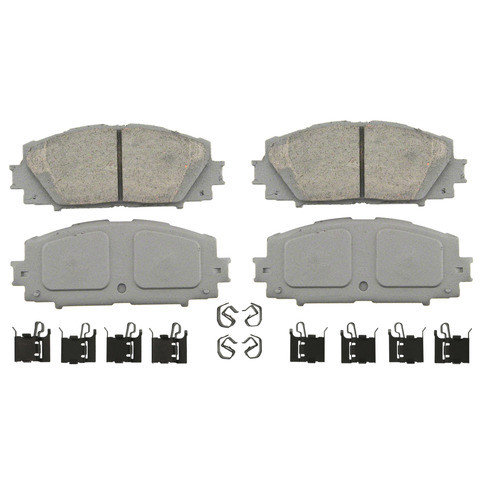
Wagner Brake Disc Brake Pad Set P/N:PD865
Wagner Brake SX1775 rear brake pad for the 2015-2019 Ford Transit-150 and other vehicles is a Wagner Brake disc brake pad set made for durable stopping performance in demanding use.
Worn pads can show up as squealing or grinding, a longer stop or the vehicle pulling to one side. A worn rotor or a sticking caliper slide can produce similar symptoms, so during a brake service measure the remaining pad thickness and look over the rotor surface for grooves, with the engine off and the brakes cool, before you decide on pads.
Other vehicles on its list include the 2015-2019 Ford Transit-250 and the 2015-2019 Ford Transit-350.
Fit and size
Build and materials
One brake pad set with pad shims and abutment clips. A pad wear sensor is not included. This listing holds one set, and the vehicle takes one set.
Interchange / FMSI:
FMSI: 1672-D1775 · D1775
This part cross-references / interchanges with the following part numbers:
Do the Wagner SX1775 pads work as 2015-2019 Ford Transit-250 brake pads?
Yes. Wagner Brake SX1775 is a rear brake pad for the 2015-2019 Ford Transit-250. For any other vehicle, look it up in the Buyer's Guide tab.
Are these 2015-2019 Ford Transit-350 brake pads front or rear?
They are rear pads. Wagner Brake SX1775 is a rear brake pad for the 2015-2019 Ford Transit-350.
Are these SevereDuty pads copper-free, and what is the friction material?
Yes. This pad uses the Wagner OE25 zero-copper friction formulation, and its friction material is semi-metallic and carbon-based.
Do the SX1775 pads come with shims and clips?
Yes. Wagner Brake SX1775 includes pad shims and abutment clips. A pad wear sensor is not included.
Are these Wagner SevereDuty pads meant for heavy loads and frequent stopping?
Yes. Wagner designed and tested this SevereDuty rear pad for fleets and police-pursuit use, and for demanding driving with frequent stops, gear hauling and heavy loads.
WARNING: These products can expose you to chemicals including lead and phthalates, which are known to the State of California to cause cancer and birth defects or other reproductive harm. For more information go to www.P65Warnings.ca.gov.