



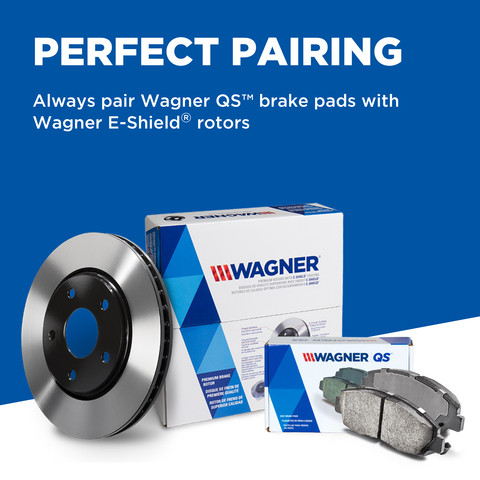


Put confident, even stopping back into your Ford Mustang with the Wagner QuickStop ZX804 Front Disc Brake Pad Set. It installs as a front-axle replacement for the 1999-2004 Ford Mustang (All engines), using an application-specific, semi-metallic friction formula engineered to match the original pads' fit and form.
- Semi-metallic friction: built with Wagner's OE25 zero-copper friction formulation for consistent, application-tuned braking.
- 100% post-cure process: designed to deliver even friction performance across the life of the pad.
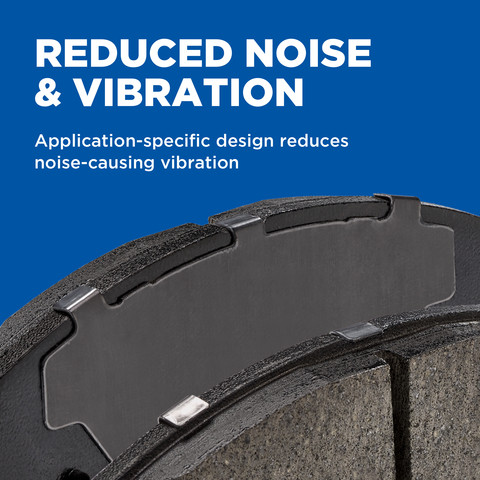
- Noise control: application-specific design intended to reduce the vibration that causes brake noise; slotted pad design.
- In the box: includes pad shims and abutment clips. No pad wear sensor is included.
Brake pads are the wear component that clamps against the rotor to slow the wheel, so they thin out over time. Signs this set may need replacing include squealing, reduced braking response, or a thin friction layer — have the brakes inspected to confirm the cause before servicing. This listing covers the front axle; inspect the rotors and replace as directed by the service procedure for balanced braking. Made in the United States.
FMSI number 7675-D804 · Manufacturer part number ZX804
This part cross-references / interchanges with the following part numbers:
Frequently Asked Questions
Will this pad set fit my Mustang?
Yes — it's a front-axle direct-fit replacement for the 1999-2004 Ford Mustang (All engines). Check the Buyer's Guide tab to confirm your exact vehicle.
What friction material are these pads?
Semi-metallic, using Wagner's OE25 zero-copper friction formulation for application-specific braking.
Does the set include hardware?
It includes pad shims and abutment clips. A pad wear sensor is not included.
Does one set cover both front wheels?
Yes, one set services the complete front axle. Inspect the rotors and replace as directed by the service procedure for even braking.
What are signs my brake pads need replacing?
Squealing, reduced braking response, vibration, or a thin friction layer. Have the brakes diagnosed to confirm the cause before servicing.
Write a Review