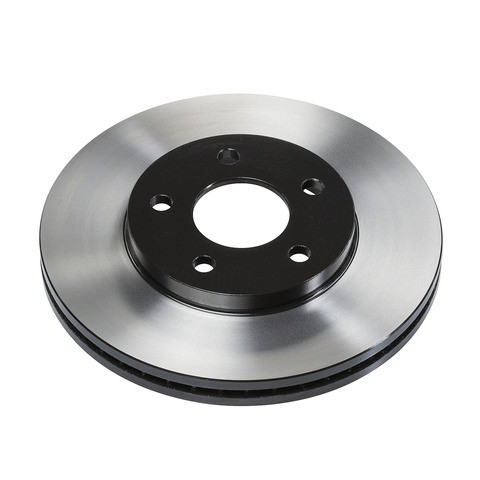
Wagner Brake Disc Brake Rotor P/N:BD126343E
Wagner Brake Disc Brake Rotor P/N:BD126343E. Fits: Chevrolet Hhr.
$72.99


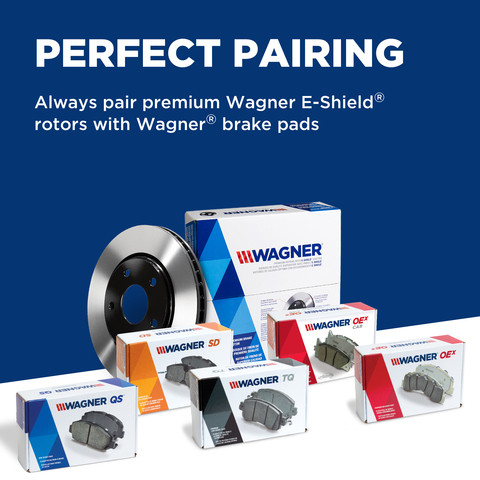

Restore smooth, quiet stops with the Wagner Brake Rear Disc Brake Rotor BD180571E. If you're shopping for Ford Escape rotors, this rear disc brake rotor drops in as a replacement for the 2013-2016 Ford Escape, the 2013-2018 Ford C-MAX and the 2014-2018 Ford Transit Connect (all engines). It's engineered to match OE requirements for consistent braking and easy installation.
This is a solid (non-vented), full-cast rotor with high-grade metallurgy for structural integrity and heat dispersion. It measures 11.024 in (280 mm) outside diameter with a nominal thickness of 0.433 in (11.0 mm). Rotors are sold individually; most applications use two per axle, so order 2 and replace both sides as a matched set for even, balanced braking. If you're refreshing your 2016 Ford Escape brakes and rotors, pair it with Wagner OEX or QS brake pads for best results. Country of origin: China.
This part cross-references / interchanges with the following part numbers:
Does this rotor fit my Ford Escape?
Yes — BD180571E fits the 2013-2016 Ford Escape (all engines), plus the 2013-2018 Ford C-MAX and 2014-2018 Ford Transit Connect. Check the Buyer's Guide tab to confirm your exact vehicle.
Is this a front or rear rotor?
It is a rear disc brake rotor.
Is this rotor solid or vented?
It's a solid (non-vented), full-cast rotor with a smooth, precision-ground surface finish.
How many rotors do I need?
Rotors are sold individually. Most applications use two per axle, so order 2 to replace both sides together as a matched pair for even braking.
What are the rotor's dimensions?
The outside diameter is 11.024 in (280 mm) with a nominal thickness of 0.433 in (11.0 mm).



WARNING: These products can expose you to chemicals including lead and phthalates, which are known to the State of California to cause cancer and birth defects or other reproductive harm. For more information go to www.P65Warnings.ca.gov.
