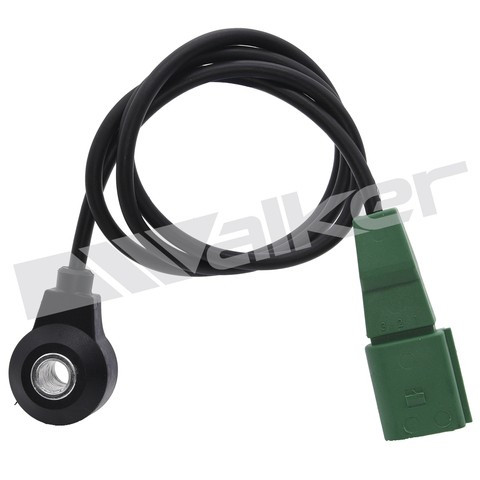
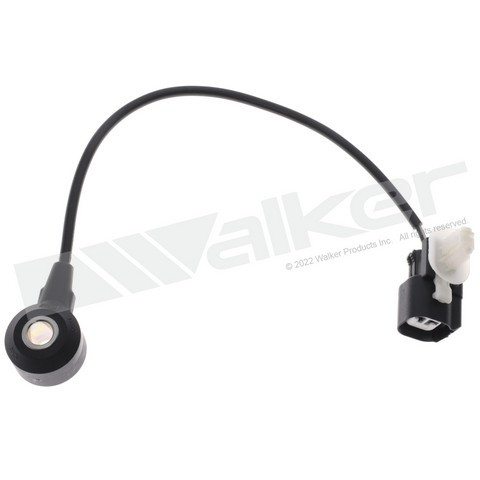
Keep detonation in check and give the ECU the real-time feedback it needs with the Walker Products Ignition Knock (Detonation) Sensor 242-1059. It's an OE-replacement, direct-fit sensor for a range of Ford, Lincoln, and Mercury applications, including the 2005-2014 Ford Expedition (V8-5.4L), 2005-2010 Ford F-250 & F-350 Super Duty (V8-5.4L), 2007-2009 Ford Mustang (V8-5.4L), 2009-2012 Ford Escape (V6-3.0L), 2010 Ford Mustang (V8-4.6L), and 2011-2014 Lincoln Navigator (V8-5.4L) — see the Buyer's Guide tab for all 13 applications.
Mounted on the engine, the sensor monitors vibration frequencies to detect knock (detonation) and feeds that signal to the ECU so it can adjust ignition timing in real time. Left uncorrected, spark knock can lead to internal engine damage, reduced fuel economy, and drivability issues, so accurate knock detection helps keep spark control on target.
- Detects engine knock: monitors vibration frequencies to identify detonation and pre-ignition.
- Built for harsh environments: heat- and oil-resistant materials for durable signal reliability.
- OE-calibrated sensitivity: tuned to match factory frequency response and electrical output for seamless ECU integration.
- Exact OE fit: installs into the original threaded location using factory-style connectors — no modifications required.
Includes a wiring harness (about 412.75 mm) with a single square male connector and two blade-style female terminals. Mounting hardware is not included. The number of knock sensors an engine uses varies by application; this listing is for one sensor. Country of origin: Taiwan.
Interchange: Manufacturer part number 242-1059 (also 2421059).
This part cross-references / interchanges with the following part numbers:
5S7292, S8828, 0 261 231 183, 0261231183, 60256, 4476762, 4L3A12A699AA, 4L3Z12A699AA, KS42, ID0301, KS228, SU8782