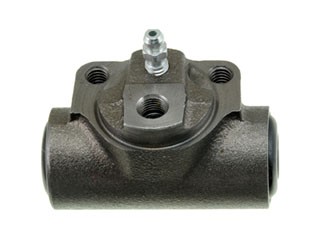
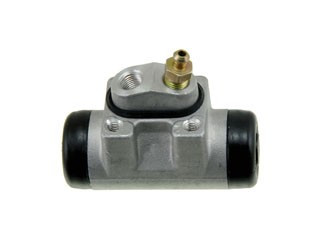
Keep the rear brake shoes working as intended with the Dorman drum brake wheel cylinder W37781 from the First Stop line, a rear unit that turns hydraulic pressure from the master cylinder into the force that pushes the brake shoes out against the drum. It fits many vehicles, among them the 1992-1999 Chevrolet C1500, 1988-1999 Chevrolet K1500 and 1995-2000 Chevrolet Tahoe. See the Buyer's Guide tab for the full list.
- Direct replacement: Dorman built this unit as a direct match for the original rear drum brake wheel cylinder on the listed applications, with the same fit, function and performance.
- EPDM rubber components: The cups and boots are made from high-quality EPDM rubber.
- Surface-tested bores: Each cylinder bore is surface-tested to give the pressure cups an optimum sealing surface.
- Quality checked: Manufactured and tested for quality assurance.
Replacing the wheel cylinder while the drum brakes are apart for service is a cost-effective step that helps maintain braking performance. Signs a wheel cylinder may need replacing include brake fluid seeping inside the drum, fluid-soaked brake shoes, a soft or sinking pedal, and the vehicle pulling to one side under braking. Diagnose the cause before you replace parts. Bleed the brake system after installation, following the vehicle service information.
Interchange: 172-1425 · 784-44020 · 84-44020 · 101-1648 · W-86020 · 134.66020 · 135.66020 · 375-47073
1721425 · 78444020 · 8444020 · 1011648 · W86020 · 13466020 · 13566020 · 37547073 · 18E292 · W906621 · 34047 · WC14047 · 18014081 · 18060090 · 116359 · WC37781 · F116359 · WC116359
This part cross-references / interchanges with the following part numbers:
172-1425, 18E292, 784-44020, 84-44020, W906621, 101-1648, W-86020, 34047, 134.66020, 135.66020, WC14047, 375-47073, 18014081, 18060090, 116359, WC37781, F116359, WC116359