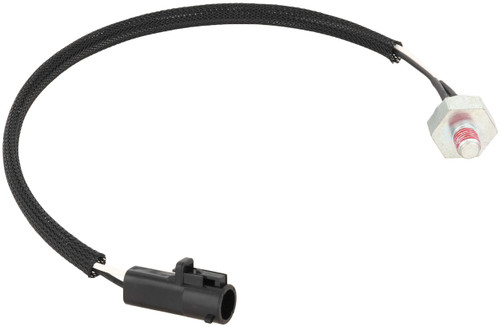
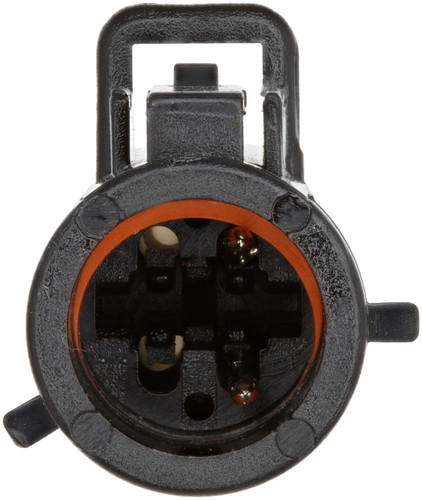
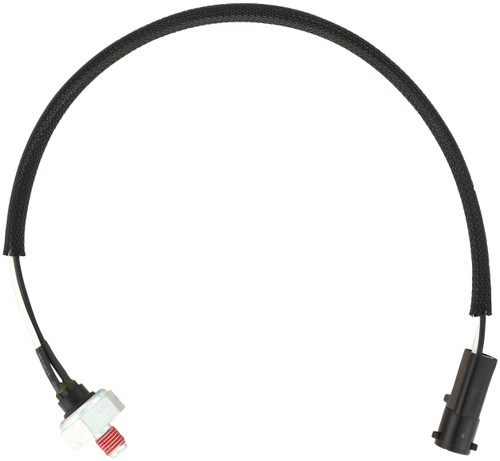
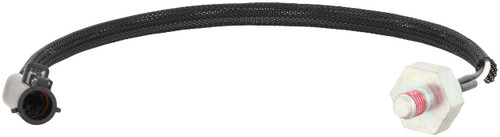
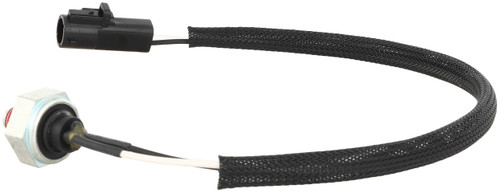
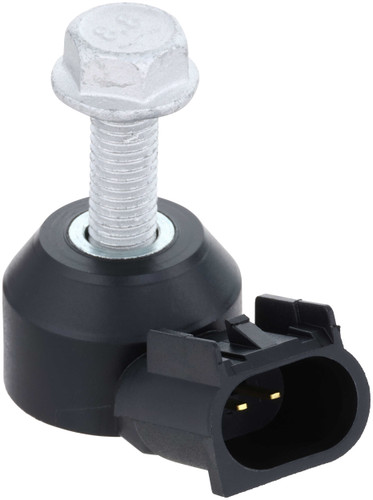
Delphi AS10349 ignition knock (detonation) sensor for the 1997-1999 Ford F-150 V8 4.6L and other vehicles senses engine knock and sends a signal to the engine control system. It is built to help guard the engine against damage from pre-ignition knocking.
- Helps maximize engine performance with all fuels
- Calibrated for a wide variety of frequencies to detect shifts and give accurate signals
- Sealed to withstand humidity, salt spray and automotive fluids
- Ground-isolated design with a 2-wire shielded harness helps protect the signal from electromagnetic interference (EMI)
- Self-generating piezoelectric design requires no power to the sensor
Quick facts
- Part: Delphi AS10349 ignition knock (detonation) sensor
- Fits: 1997-1999 Ford F-150 V8 4.6L and other vehicles
- Condition: New
A failing sensor can show up as a check engine light, pinging under load or reduced power. Before you replace the sensor, look over its harness and connector and rule out other sources of pinging, since a damaged wire or a different fault can look the same.
Fits
The 1997-1999 Ford F-250 V8 4.6L and the 1997-1999 Ford Expedition V8 4.6L fit this sensor as well, and so do other vehicles. If yours is not named here, look up its year and engine in the "Vehicles it fits" section.
Specifications
Fit and size
- Quantity per vehicle: 1
- Quantity per listing: 1
Build and materials
- Type: ignition knock (detonation) sensor
- Design: self-generating piezoelectric
- Harness: 2-wire, shielded, ground isolated
- Sealing: humidity, salt spray, automotive fluids
- Condition: New
In the box
One ignition knock (detonation) sensor. This listing holds one sensor, and a single sensor is the quantity per vehicle.
Interchange: F6ZZ 12A699-AA
S8665 · DKS322 · KS127 · 5S2223
This part cross-references / interchanges with the following part numbers:
S8665, DKS322, F6ZZ 12A699-AA, KS127, 5S2223
Frequently Asked Questions
Does the Delphi AS10349 fit a 1997-1999 Ford F-150 with the 4.6L V8?
Yes. Delphi AS10349 fits the 1997-1999 Ford F-150 V8 4.6L, and that truck takes one sensor.
Does the Delphi AS10349 need power to work?
No. This sensor's self-generating piezoelectric design requires no power.
What kind of harness does the Delphi AS10349 have?
Delphi AS10349 has a ground-isolated design with a 2-wire shielded harness, which helps protect the sensor signal from electromagnetic interference (EMI).
Is the Delphi AS10349 sealed against road salt and fluids?
Yes. The sensor is sealed to withstand humidity, salt spray and automotive fluids.
Does the Delphi AS10349 come as a single sensor?
Yes. The listing is one ignition knock (detonation) sensor, and the quantity per vehicle is one.