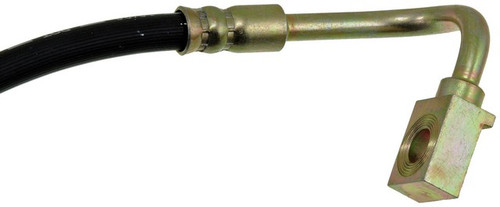
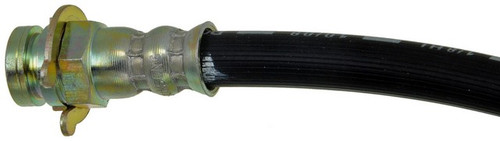
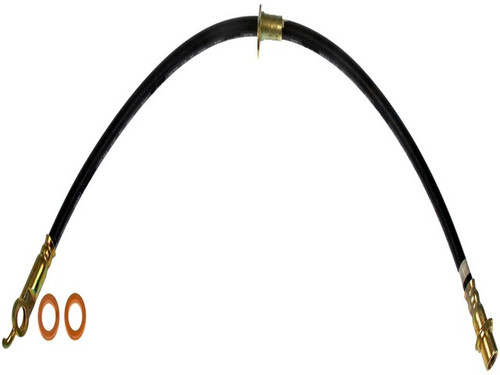
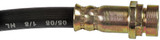
Carry hydraulic brake pressure through a flexible, position-specific connection with the Dorman brake hydraulic hose H38267 from Dorman - First Stop, built with EPDM rubber and coated, corrosion-resistant fittings. It fits many vehicles, among them the 1996-2002 Chevrolet C3500HD, 1996-2002 GMC C3500HD and 1990-2000 Chevrolet C3500, and is cataloged for the rear right (rear right outer) position. See the Buyer's Guide tab for the full vehicle and engine list.
- Ideal replacement: Precision-engineered to perform like the original brake hose on specific vehicles and positions, as part of a complete brake repair.
- Position-specific: Made to precise measurements for an exact fit and easy installation.
- Quality assured: Its materials are tested to exacting government-regulated safety and durability standards.
- Durable design: Constructed with EPDM rubber and specially coated, corrosion-resistant fittings.
A brake hydraulic hose is the flexible section of the brake plumbing. It carries brake fluid pressure while allowing for suspension and axle movement. Signs a hose may need replacing include cracks, bulges or fluid seepage on the hose, a soft or spongy brake pedal, or a pull during braking. Because these symptoms can have other causes, inspect the brake system to confirm the source before replacing parts. After installation, bleed the brakes following the vehicle's service procedure.
Interchange: 87-44308 · HB-86308 · 150.66308 · 350-47358
8744308 · HB86308 · 15066308 · 35047358 · 18J354 · B917154 · 612205 · 77330 · BH177330 · 22113492 · 94665585 · 9766866 · NF38267 · BH38267 · 2201245 · BH104342 · F104342
This part cross-references / interchanges with the following part numbers:
18J354, 87-44308, B917154, 612205, HB-86308, 77330, 150.66308, BH177330, 350-47358, 22113492, 94665585, 9766866, NF38267, BH38267, 2201245, BH104342, F104342