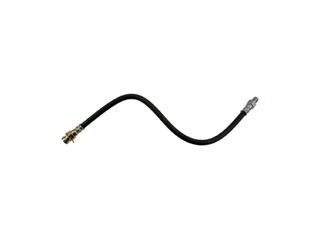
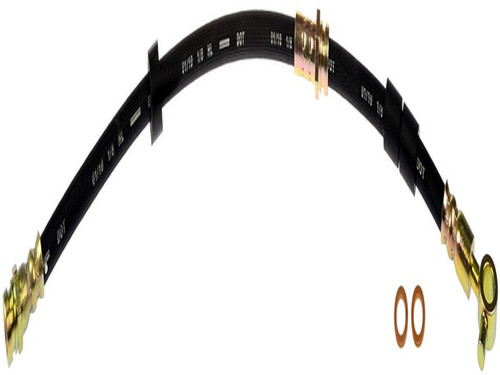
Deliver hydraulic pressure to the wheel and flex with every suspension and steering movement using the Dorman – First Stop Brake Hydraulic Hose (MPN H6560). This 18.25-inch flexible hose installs as a position-specific replacement for the 1942-1947 Ford 1/2 Ton Pickup, 1946-1947 Ford 1 Ton Pickup and 3/4 Ton Pickup, 1948-1952 Ford F-1, F-2 and F-3, and 1953-1966 Ford P-350 [All] — see the Buyer's Guide tab for the exact position on your vehicle.
- EPDM rubber build: made with EPDM rubber and specially coated, corrosion-resistant treated-steel fittings.
- Position-specific fit: manufactured to precise measurements for an exact fit and easy installation.
- Tested to standards: DOT approved, with materials tested to government-regulated safety and durability standards.
- Fitting ends: a male end with a 7/16-20 thread and a female end with a 7/16-24 inside diameter.
A brake hydraulic hose carries pressurized brake fluid from the rigid line to the caliper or wheel cylinder while flexing with the moving wheel. Cracking, bulging, leaking, or a soft, spongy pedal are signs the original hose may need replacing; if a failing hose is the cause, this replaces it. Ships as one hose — no mounting hardware, bracket, gasket, seal, or jacket is included; consult the vehicle service information for the correct fasteners and whether they may be reused. Country of origin: China.
Interchange: B917793 · B918063 · 610187 · 77139 · 150.65355 · 150.66300 · BH416850 · 350-47350 · 35047350 · D5TZ2282D · D8HZ2282A · 2058104 · NF1010 · BH6560 · 2203516 · BH71369 · F6560 · F71369. Manufacturer part number H6560.
This part cross-references / interchanges with the following part numbers:
B917793, B918063, 610187, 77139, 150.65355, 150.66300, BH416850, 350-47350, D5TZ2282D, D8HZ2282A, 2058104, NF1010, BH6560, 2203516, BH71369, F6560, F71369