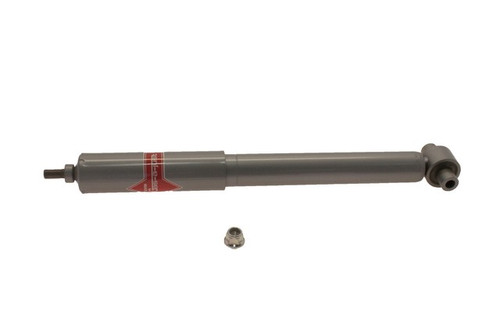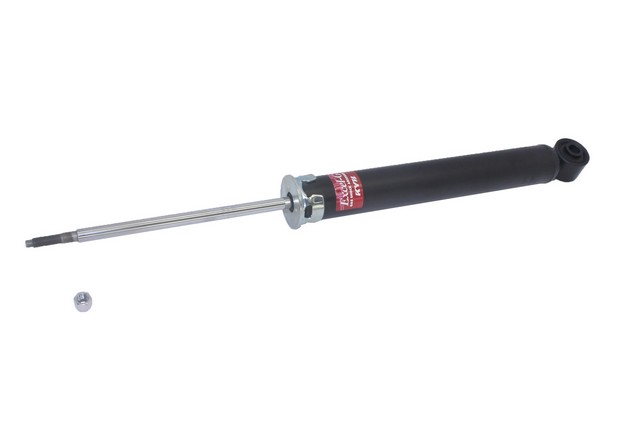
Help restore the original ride control and handling of your GM sedan with the KYB Excel-G Gas Shock 349136, a nitrogen gas-charged, twin-tube rear shock absorber. It installs as a direct-fit replacement for the rear position on the 2010-2016 Buick LaCrosse, 2011-2017 Buick Regal, 2014-2020 Chevrolet Impala, 2013-2015 Chevrolet Malibu, and 2016 Chevrolet Malibu Limited — see the Buyer's Guide tab for engine-level fitment.
- OEA design: The Excel-G is built on KYB's OE assembly lines and calibrated to restore the vehicle's originally designed damping performance, earning its Original Equipment for the Aftermarket classification.
- Twin-tube, gas-charged: A nitrogen gas-charged, twin-tube construction that carries the quality components KYB uses in its global OEM products.
- Triple-lip fluid seal: Helps reduce the chance of oil and gas leaking out.
- Damping valves: Vehicle-specific, hand-assembled valving is designed to manage tire contact, steering response, and body movement, helping keep electronic safety systems performing as intended.
Signs a shock may need replacing include excessive bouncing, nose-dive under braking, uneven tire wear, or fluid leaking from the shock body. Shocks work as a pair — replacing both sides together is recommended for balanced ride control. This listing is for one shock.
Interchange: 20859302 · 20859305 · 20901066 · 20982300 · 5647
This part cross-references / interchanges with the following part numbers:
Frequently Asked Questions
What position does this KYB 349136 shock fit?
It is a rear shock absorber. This KYB Excel-G 349136 replaces the rear damper on the listed GM applications.
Which vehicles does this shock fit?
It's a direct-fit rear replacement for the 2010-2016 Buick LaCrosse, 2011-2017 Buick Regal, 2014-2020 Chevrolet Impala, 2013-2015 Chevrolet Malibu, and 2016 Chevrolet Malibu Limited. Check the Buyer's Guide tab.
What type of shock is the Excel-G?
It's a nitrogen gas-charged, twin-tube design built on KYB's OE assembly lines and calibrated to restore the vehicle's originally designed damping performance (OEA).
Do I need to replace both rear shocks?
Shocks work as a pair, so replacing both rear sides together is recommended for balanced, even ride control. This listing is for one shock.
How do I know if my shock needs replacing?
Signs include excessive bouncing, nose-dive under braking, uneven tire wear, or fluid leaking from the shock body. Diagnose the cause before replacing.