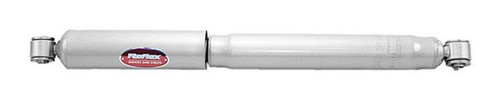
Smooth out a bouncy, worn-out ride with the Monroe Restore Suspension Shock Absorber 210014, a MONROE shock absorber built to filter out noise, vibration and harshness while helping keep the wheels planted. It installs as a direct-fit rear shock absorber for the 2018-2020 Chevrolet Beat, the 2011-2015 Chevrolet Spark, and the 2016-2017 Chevrolet Spark Classic — see the Buyer's Guide tab for the full engine breakdown.
Part of the Monroe Restore line for domestic and import passenger cars, light trucks and SUVs, this is a MONROE rear shock absorber engineered to deliver consistent handling and control.
- Nitrogen gas-charge: helps maintain tire-to-road contact for improved ride and handling by reducing aeration and shock fade.
- Banded piston: helps reduce friction between the piston and pressure tube to enhance responsiveness to changing road surfaces for smooth operation.
- Validated performance: designed and validated for consistent performance across its listed applications.
- Expanded coverage: available across domestic and import passenger cars, light trucks and SUVs.
Signs a shock may need replacing include excessive bounce over bumps, nose-dive under braking, and uneven tire wear; if a worn rear shock is the cause, this unit replaces it.
Interchange: 95095459 · 95259955 · TS3239622B · 346084 · 348036 · 5537 · NS5537 · 316594
This part cross-references / interchanges with the following part numbers:
95095459, 95259955, TS3239622B, 346084, 348036, 5537, NS5537, 316594