






Smooth out a worn, bouncy rear ride with the Monroe Monro-Matic Plus Rear Suspension Shock Absorber 33336. This rear-position damper drops in as a direct-fit replacement for the 1982-1989 Lincoln Continental, 1990-2001 Lincoln Town Car, 1992-2002 Ford Crown Victoria, 1992-2002 Mercury Grand Marquis, and 2001-2002 Ford Grand Marquis — see the Buyer's Guide tab for engine-level fitment.
- Consistent ride: Velocity Proportional Valving (VPV) technology plus all-weather fluid with friction-reducing additives is designed for smooth rod reaction and an overall smoother ride.
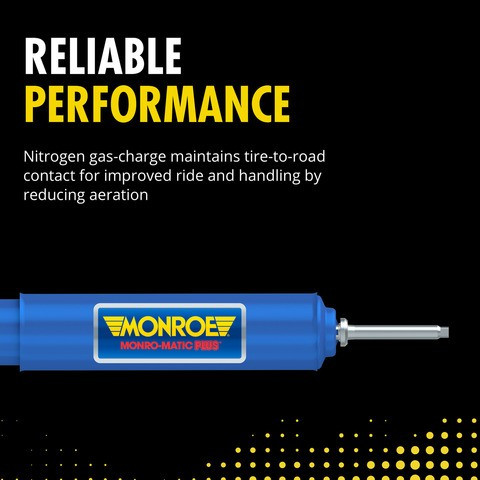
- Reliable performance: a nitrogen gas charge helps maintain tire-to-road contact and reduces aeration for improved ride and handling.
- Damping control: a larger bore provides more efficient damping control for consistency and a smooth ride (where applicable).
- Built to last: a self-lubricating fluid seal retains gas and reduces friction against the piston rod, while a banded piston and bronze-reinforced guide add durability.
Engineered and validated to meet OE specifications. If worn rear shocks are the cause of excessive bounce, nose-dive, or poor tire contact, replacing them can help restore controlled damping. Shocks wear as a set — replacing both rear units together is recommended for balanced handling.
Frequently Asked Questions
What position does this shock fit?
It is a rear suspension shock absorber for the listed applications. Replacing both rear shocks together is recommended for balanced, even handling.
Which vehicles does the 33336 fit?
It fits the 1982-1989 Lincoln Continental, 1990-2001 Lincoln Town Car, 1992-2002 Ford Crown Victoria, 1992-2002 Mercury Grand Marquis, and 2001-2002 Ford Grand Marquis. Check the Buyer's Guide for engine-level fitment.
What is Velocity Proportional Valving (VPV)?
VPV technology, combined with all-weather fluid containing friction-reducing additives, is designed to promote smooth rod reaction and a consistent, smoother ride.
Is this a gas-charged shock?
Yes. A nitrogen gas charge helps maintain tire-to-road contact and reduces aeration for improved ride and handling.
How do I know my rear shocks need replacing?
Signs may include excessive bouncing, nose-dive when braking, or poor tire contact. Diagnose the cause first; if worn rear shocks are the issue, these replace them.
Write a Review