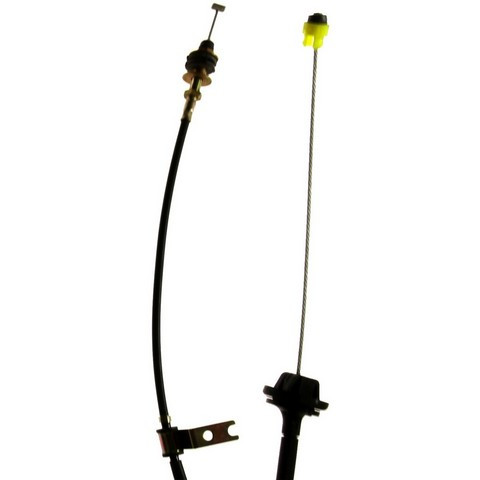
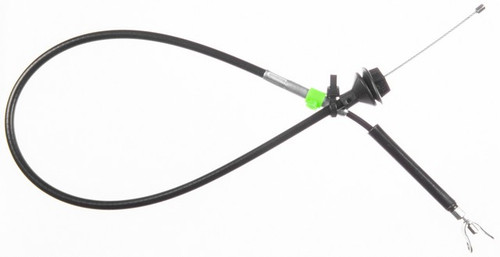
Link your accelerator pedal to the carburetor's throttle linkage with the Pioneer Carburetor Accelerator Cable CA-8811. It is a direct-fit replacement for the listed application, the 1983 Honda Accord. See the Buyer's Guide tab for engine details.
The accelerator cable links the gas pedal to the carburetor throttle linkage. Pressing the pedal pulls the cable to open the throttle, and releasing it lets the throttle close back toward idle. Over time, a cable can fray, stretch, kink or bind inside its housing, which can affect how the pedal feels and how the throttle responds.
- Built to OE specs: Pioneer cables are manufactured to OE specifications as a high-quality replacement alternative.
- Steel inner cable: A durable steel inner cable carries pedal movement to the carburetor.
- Polymer outer housing: The polymer housing surrounds the inner cable and helps protect it from corrosion and abrasion.
Signs this part may need replacing: The pedal may stick or feel stiff, or the throttle may return slowly to idle. You may also notice excess slack, delayed throttle response, or a cable that is visibly frayed or kinked. Inspect the cable and throttle linkage to confirm the cause first. If a worn accelerator cable is the problem, this part replaces it.
Interchange: 61809 · 950393 · CE224 · 17910SA5670 · CB184
This part cross-references / interchanges with the following part numbers:
61809, 950393, CE224, 17910SA5670, CB184