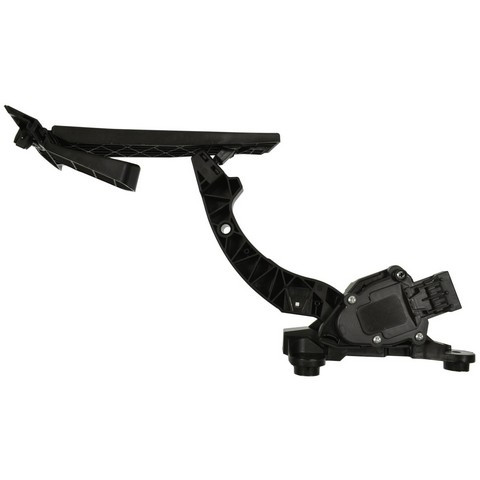
Standard Ignition APS355 accelerator pedal sensor for the 2012-2015 Hyundai Sonata sends pedal position data to the ECU. It is engineered to integrate with the electronic throttle control system.
- Pedal position signal for precise throttle control across driving conditions
- Polyamide 6 material
- Oval plug-in connector with six male blade terminals
- Bolt-on attachment
Quick facts
- Part: Standard Ignition APS355 accelerator pedal sensor
- Fits: 2012-2015 Hyundai Sonata
- Material: Polyamide 6
- Condition: New
A worn or failing pedal sensor can show up as a delayed or uneven throttle response, a dash warning light or limited engine power. Those signs alone do not prove this sensor is the problem, since a throttle body fault can cause them too.
Fits
This accelerator pedal sensor is a direct-fit replacement for the 2012-2015 Hyundai Sonata, which takes one. This listing is one sensor.
Specifications
Fit and size
- Quantity per vehicle: 1
- Attachment method: Bolt on
- Connector shape: Oval
- Terminal quantity: 6
Build and materials
- Material: Polyamide 6
- Terminals: male, blade
- Connector: female, plug in
- Condition: New
- Country of origin: Republic of Korea
In the box
One accelerator pedal sensor supplied with its pedal assembly and a mounting bracket. Hardware is not included and no linkage is attached, so plan on new bolts.
Interchange: 2-80255
PPS1255 · SU14478 · 327003S110 · 7003S110
This part cross-references / interchanges with the following part numbers:
PPS1255, SU14478, 2-80255, 327003S110, 7003S110, APS355
Frequently Asked Questions
Is the Standard Ignition APS355 accelerator pedal sensor right for the 2012-2015 Hyundai Sonata?
Yes. Standard Ignition APS355 fits the 2012-2015 Hyundai Sonata, and that car takes one sensor.
Which parts come with the APS355 accelerator pedal sensor?
The Standard Ignition APS355 includes the pedal assembly and a mounting bracket. Hardware is not included and no linkage is attached.
How many terminals does the connector on this accelerator pedal sensor have?
The Standard Ignition APS355 has one oval, female plug-in connector with six male blade terminals.
What can a faulty accelerator pedal sensor do to throttle response?
Delayed throttle response, a dash warning light or limited engine power can accompany a faulty pedal sensor. A shop can scan for codes and test the circuit.
Does Standard Ignition APS355 cross to number 327003S110?
Yes. 327003S110 is one of the numbers this sensor replaces, along with 7003S110, 2-80255, PPS1255 and SU14478.