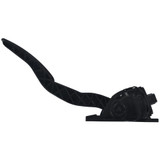
Standard Ignition APS381 accelerator pedal sensor for the 2011-2017 Honda Odyssey and other vehicles sends pedal position data to the ECU.
- Factory-accurate pedal position data for precise throttle control
- Integrates with the electronic throttle control system
- Pedal assembly and mounting bracket included
- One rectangular plug-in connector with six male blade terminals
Quick facts
- Part: Standard Ignition APS381 accelerator pedal sensor
- Fits: 2011-2017 Honda Odyssey and other vehicles
- Material: Polyamide 6
- Condition: New
A worn pedal sensor can show up as hesitation, uneven throttle response or a warning light. Before replacing it, look over the connector and wiring with the engine off for damage, corrosion or a loose fit, since other faults can produce similar symptoms. A shop can test the sensor signal.
Fits
The sensor fits the 2011-2017 Honda Odyssey and the 2009-2016 Honda Pilot. This listing is one sensor, and a single sensor is all either vehicle needs.
Specifications
Fit and size
- Quantity per vehicle: 1
- Connector quantity: 1
- Terminal quantity: 6
- Attachment method: Bolt on
Build and materials
- Material: Polyamide 6
- Connector: rectangular, female, plug in
- Terminals: male blade
- Condition: New
- Country of origin: Thailand
In the box
One accelerator pedal sensor with the pedal assembly and a mounting bracket. Hardware is not included, so plan on new fasteners. The linkage is not attached.
Interchange: 2-80281
PPS1281 · SU14599 · 17800SZAA01 · 17800SZAA02 · 17800SZAA03
This part cross-references / interchanges with the following part numbers:
PPS1281, SU14599, 2-80281, 17800SZAA01, 17800SZAA02, 17800SZAA03, APS381
Frequently Asked Questions
Is the Standard Ignition APS381 pedal sensor the right one for a 2011-2017 Honda Odyssey?
Yes. Standard Ignition APS381 fits the 2011-2017 Honda Odyssey and also the 2009-2016 Honda Pilot, and each takes one sensor.
Does this accelerator pedal sensor come with the pedal assembly?
Yes, the pedal assembly and a mounting bracket are included. Hardware is not included, and the linkage is not attached.
What kind of connector does the Standard Ignition APS381 have?
Standard Ignition APS381 has one rectangular, female plug-in connector with six male blade terminals.
What can a failing accelerator pedal sensor look like?
Hesitation, uneven throttle response or a warning light can be signs of a worn sensor. A shop can scan for stored codes to confirm.
Does the Standard Ignition APS381 replace part number PPS1281?
Yes. PPS1281 is one of the numbers this sensor replaces, along with the others on the Interchange line.