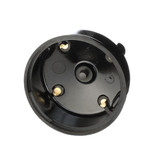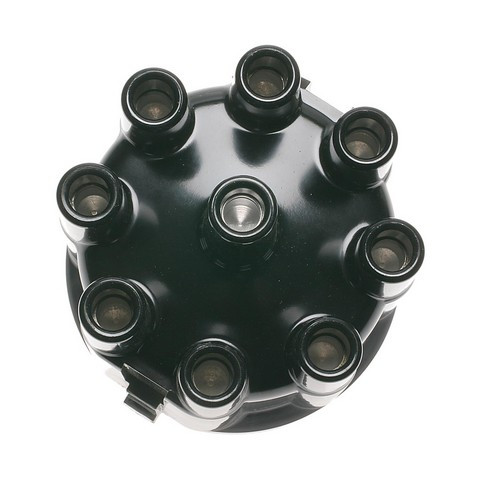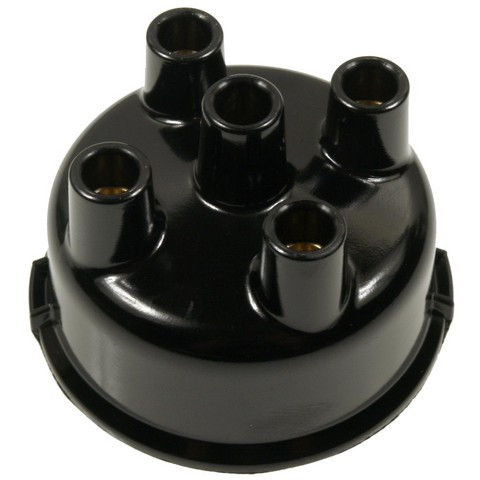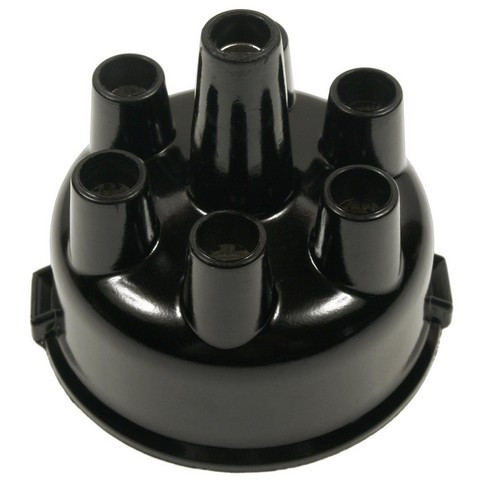
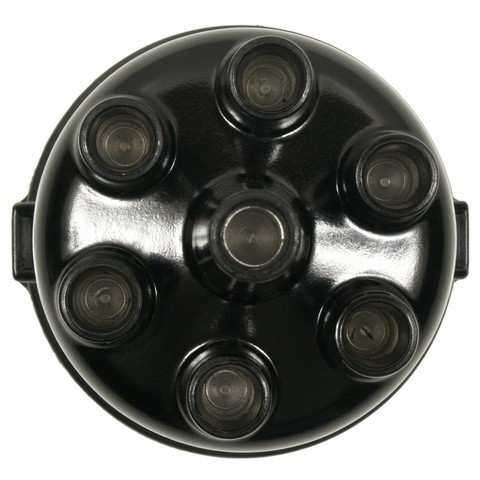
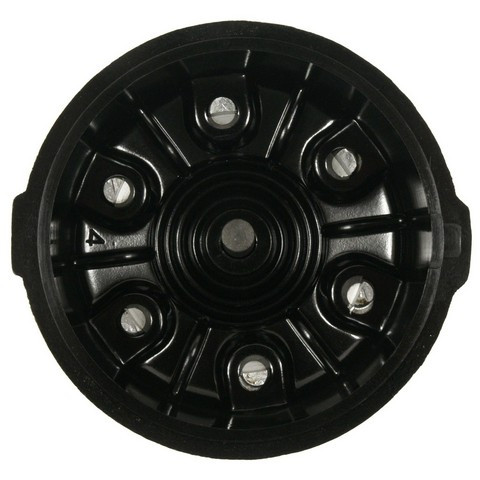
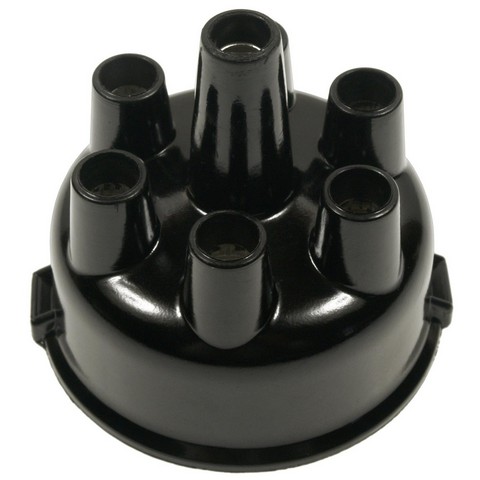
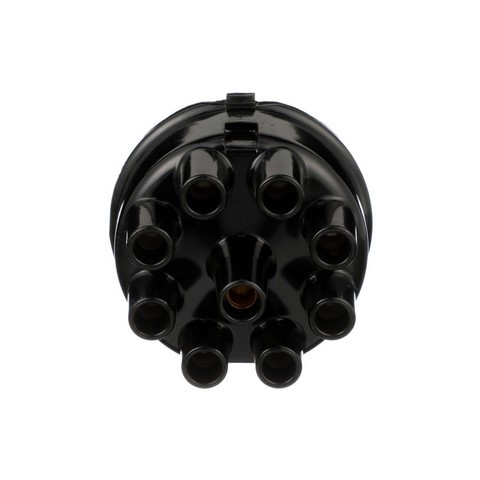
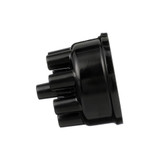
Standard Ignition Distributor Cap P/N:AL-131
Send high-voltage spark from the rotor to each plug wire with the Standard Ignition Distributor Cap AL-138. It is a direct-fit replacement for the listed applications, including the 1947-1948 Dodge Deluxe, 1951-1954 Chrysler Windsor, 1952-1959 Dodge Coronet, 1959-1962 American Motors American and 1960-1966 Dodge D100 Series. That is a sample of 169 applications. See the Buyer's Guide tab for the full list and engine details.
The distributor cap sits over the rotor. As the rotor turns, the cap's terminals pass current from the ignition coil to each spark plug wire in firing order.
Over time a cap can crack, collect moisture, develop carbon tracks or wear and corrode at its terminals. Any of these may be a sign that it needs replacing. Misfires, rough running or hard starting can also have other ignition or fuel-system causes, so diagnose the cause before replacing parts.
What does a distributor cap do?
It carries high-voltage current from the ignition coil, through the rotor, to each spark plug wire terminal in firing order.
What signs may mean my distributor cap needs replacing?
Cracks, carbon tracks, moisture inside the cap, or burned or corroded terminals may indicate a worn cap. Misfires and hard starting can have other causes, so diagnose first.
What is the AL-138 cap made of?
Standard makes its distributor caps from a high dielectric strength, glass/mineral reinforced polyester resin. It is designed to reduce carbon tracking and resist electrical breakdown.
Which vehicles does the AL-138 fit?
It is listed for 169 applications, including the 1952-1959 Dodge Coronet and the 1959-1962 American Motors American. See the Buyer's Guide tab for the full list and engine details.
Who manufactures this distributor cap?
Standard Ignition, a global manufacturer of original equipment ignition products. It keeps quality control in-house, from componentry through to the finished product.
WARNING: These products can expose you to chemicals including lead and phthalates, which are known to the State of California to cause cancer and birth defects or other reproductive harm. For more information go to www.P65Warnings.ca.gov.