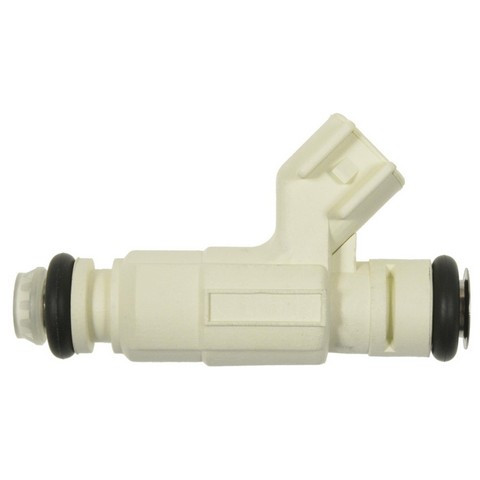
Standard Ignition Fuel Injector P/N:FJ356
Standard Ignition FJ220 fuel injector for the 1993-2002 Mazda 626 V6 2.5L and other vehicles delivers metered fuel to the engine as a fine spray. This new Standard Ignition fuel injector is an MFI unit designed for Ford and Mazda engines.
A rough idle, a misfire or a fuel smell can mean an injector is clogged or leaking. A weak ignition coil can also make an engine run rough, so these signs alone do not prove the injector is at fault.
It is listed for a wide range of Mazda models and the Ford Probe, including a fuel injector for the 1995-2002 Mazda Millenia V6 2.5L and the 1993-1997 Ford Probe V6 2.5L. Those engines take six injectors, and this listing is one injector. If your car is not named here, run its year and model through the "Vehicles it fits" section.
Fit and size
Build and materials
Interchange: 2-18650 · 800-1219N
57105 · F32Z9F593B · KL0113250
This part cross-references / interchanges with the following part numbers:
Is the FJ220 a fuel injector for the 1993-2002 Mazda 626 V6 2.5L?
Yes. Standard Ignition FJ220 is listed for the 1993-2002 Mazda 626 V6 2.5L, and that engine takes six injectors.
What kind of electrical connector does this fuel injector have?
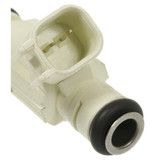
It has two male blade terminals, and they are made of corrosion-resistant brass.
What are the O-rings on the FJ220 made of?
They are high-temperature Viton(R) O-rings, intended to seal in extreme conditions and help prevent fuel leaks.
What symptoms can a worn or clogged MFI fuel injector cause?
Hard starting, weaker fuel economy or a stumble under acceleration can be linked to a clogged or leaking injector. A shop can test spray and flow, since that needs the engine running.
How is the FJ220 tested before it is installed?
Standard Ignition FJ220 is end-of-line tested and calibrated. It is also validated through lab, climate and real-world vehicle testing in the USA.
No reviews yet — be the first to review this product.
Write a Review
WARNING: These products can expose you to chemicals including lead and phthalates, which are known to the State of California to cause cancer and birth defects or other reproductive harm. For more information go to www.P65Warnings.ca.gov.