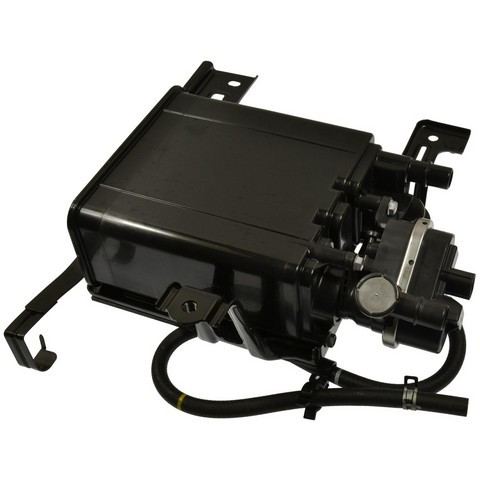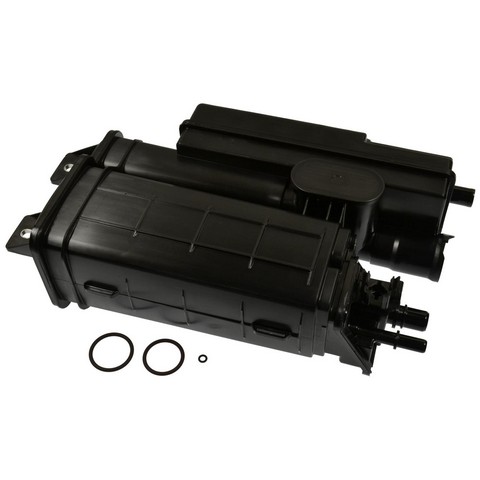
Standard Ignition Vapor Canister P/N:CP3202
Standard Ignition CP3463 vapor canister for the 2012-2019 Honda CR-V 4-cylinder 2.4L and other vehicles traps fuel vapor from the tank. It belongs to the evaporative emission system, which keeps that vapor from venting to the air.
A failing canister can show up as a fuel smell, an evaporative emission code or a tank that is slow to fill. These signs alone do not prove the canister is the problem, since a loose or worn fuel cap can set a similar code.
This direct-fit OE replacement suits the 2012-2019 Honda CR-V 4-cylinder 2.4L and the 2013-2018 Acura RDX V6 3.5L, and each takes one canister. Its connector and terminals are OE-matched, and it is engineered for higher-mileage Honda and Acura vehicles.
Fit and size
Build and materials
One vapor canister with its filter element. Mounting hardware is not included, so plan on new fasteners.
Does Standard Ignition CP3463 fit the 2012-2019 Honda CR-V 4-cylinder 2.4L?
Yes. Standard Ignition CP3463 is listed for the 2012-2019 Honda CR-V 4-cylinder 2.4L, and that CR-V takes one canister.
Does the CP3463 vapor canister include a filter element and mounting hardware?
Standard Ignition CP3463 includes a filter element but not mounting hardware, so plan on new fasteners.
What hose size does this vapor canister take?
This canister has three ports and three hose connectors for 7/16 in (18 mm) hose. Its length is 19.2 in.
How is the Standard Ignition CP3463 vapor canister built and tested?
The housing is designed to withstand temperature fluctuations, chemicals and debris. The canister is tested in the lab and on vehicles.
Can a worn vapor canister cause a fuel smell?
It can, since the canister holds fuel vapor for the evaporative emission system. A shop can test that system to find the source.
No reviews yet — be the first to review this product.
Write a Review
WARNING: These products can expose you to chemicals including lead and phthalates, which are known to the State of California to cause cancer and birth defects or other reproductive harm. For more information go to www.P65Warnings.ca.gov.