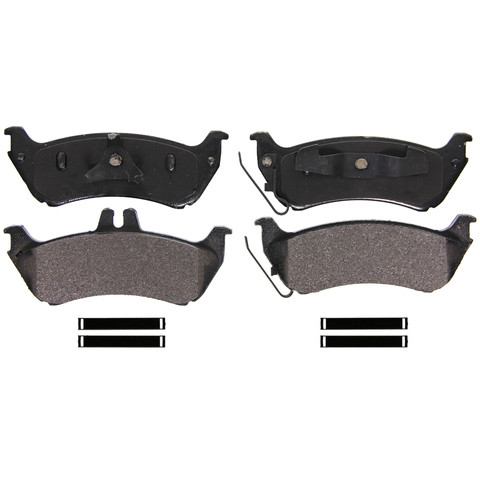

Bring your Mercedes-Benz SUV's rear brakes back to like-new bite with the Wagner QuickStop ZX875 Rear Disc Brake Pad Set. This semi-metallic set installs as a direct-fit rear replacement for the 1998-2003 Mercedes-Benz ML320, 2003-2005 ML350, and 1999 ML430 (All engines), with an OE fit-and-form design engineered for consistent, even braking throughout the life of the pad.
- Semi-metallic friction: Wagner's OE25 zero-copper formulation grips the rear rotors to slow the wheels with steady, even friction.
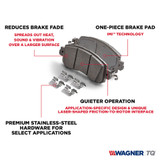
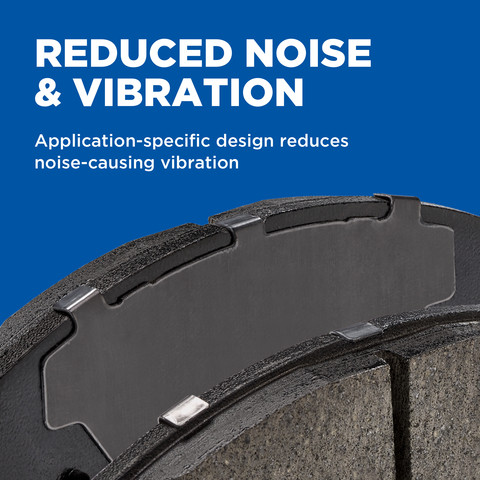
- Quiet, stable operation: Slotted pads with chamfered edges, plus included shims and abutment clips, are designed to reduce noise-causing vibration.
- 100% post-cure process: Helps deliver even friction performance throughout the life of the pad.
- Electronic wear sensor included: A pad wear sensor is included to help signal when the pads may need replacing.
Premium stainless-steel hardware and OE-style lubricant are included on most applications. This set services the complete rear axle; for balanced braking, inspect the rear rotors and replace them as a matched pair if worn. Country of origin: United States.
Interchange: FMSI reference 7750-D875 · Manufacturer part number ZX875.
This part cross-references / interchanges with the following part numbers:
Frequently Asked Questions
Which vehicles does the ZX875 pad set fit?
It's a rear disc brake pad set for the 1998-2003 Mercedes-Benz ML320, 2003-2005 ML350, and 1999 ML430 (All engines). Check the Buyer's Guide tab to confirm your exact vehicle.
What friction material are these pads made from?
Semi-metallic, using Wagner's OE25 zero-copper friction formulation for steady, even friction performance.
Does the set include hardware and a wear sensor?
Yes — an electronic pad wear sensor, pad shims, and abutment clips are included. Premium stainless-steel hardware and OE-style lubricant are included on most applications.
Do these pads fit the front axle?
No. This is a rear disc brake pad set for the listed applications.
How do I know when the pads need replacing?
Signs the pads may need replacing include brake squeal, reduced braking response, or a wear-sensor warning. Diagnose the cause before replacing.