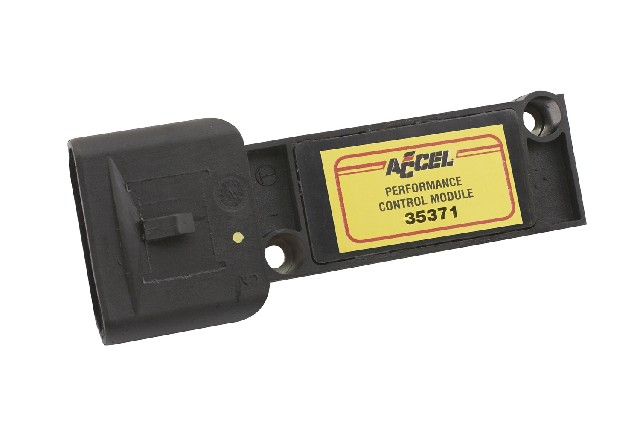
Deliver a strong, consistent spark with the ACCEL Ignition Control Module (P/N 35371), a solid-state TFI remote-mounted distributor control module built to replace most Ford TFI remote-mounted modules. It drops in across a wide 1991-1997 Ford, Lincoln, Mazda and Mercury range — including the Ford Aerostar, Bronco, E-150/E-250/E-350 Econoline, Explorer, F-150/F-250/F-350, F-Super Duty, Mustang, Ranger, Taurus and Thunderbird, plus the Lincoln Continental, Mazda B3000 and Mercury Cougar and Sable. See the Buyer's Guide tab for the full application list with engine codes.
- Solid-state electronics: deliver high coil output and are designed for superior reliability.
- Dwell control circuit: provides long, consistent coil charging.
- Current control circuit: protects against coil overheating.
- Broad compatibility: fits most stock and modified distributors and resists false triggering.
The module controls how the ignition coil charges and fires, timing the spark that ignites the mixture in each cylinder. If a failed TFI module is the cause of a no-start, stalling, or hard-starting condition, this replaces it — diagnose the cause before ordering. Each listed application uses one module (Quantity Per Application: 1). Made in the United States. Manufacturer part number 35371.