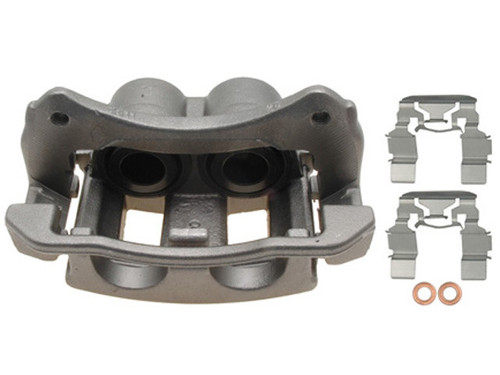
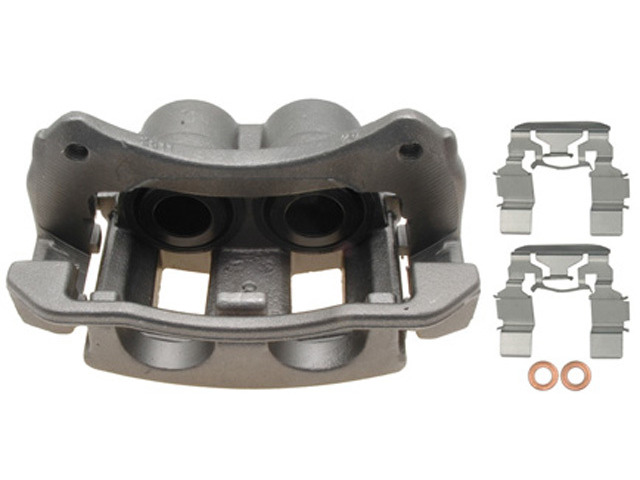
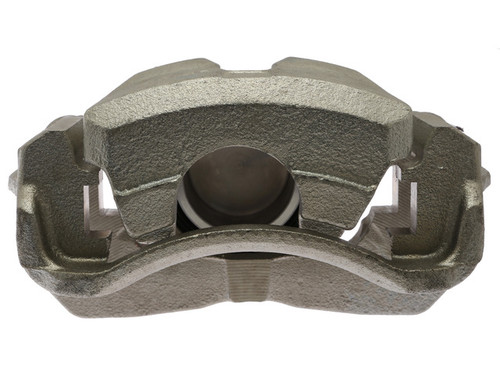
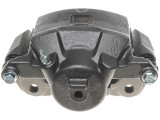
Keep your braking steady and even with the Raybestos R-Line FRC11204, a remanufactured semi-loaded caliper and bracket assembly for the front left wheel position. It fits many vehicles, among them the 2002-2005 Ford Explorer, 2003-2011 Ford Ranger and 2008-2010 Mazda B2300, all engines. See the Buyer's Guide tab for the full list.
Raybestos R-Line non-plated calipers are remanufactured OE parts built with all-new rubber and sealing components. Castings, guide pins and brackets are each carefully inspected before they are reused, and every caliper is rigorously tested for reliable braking performance.
- New sealing parts: seals, boots, bleeder screws, abutment hardware, banjo bolts and O-rings are replaced with new materials to help provide leak-free operation.
- Pressure tested: every unit is 100% pressure tested.
- EPDM70 rubber components: used for heat resistance, performance and durability.
- OE-matched materials: materials match OE specifications and meet vehicle-specific designs.
Specifications: floating caliper type with a cast iron casting, a 46 mm (1.811 in) piston diameter, a 3/8-24 bleeder screw thread, and a 12 mm bracket mounting hole with a 1.75 mm thread pitch. Country of origin: Mexico.
This disc brake caliper is sold individually for the front left position. Replacing both front calipers together is recommended for even, balanced braking.
Interchange: 18-B4759 · 15-13260 · 99-17888B · 18-P4759 · 141.65048 · 14-3260 · 11-23115-1
18B4759 · 1513260 · 9917888B · 18P4759 · 14165048 · 143260 · 11231151 · SC1379 · 1L5Z2B120AB
This part cross-references / interchanges with the following part numbers:
18-B4759, 15-13260, 99-17888B, 18-P4759, 141.65048, SC1379, 1L5Z2B120AB, 14-3260, 11-23115-1