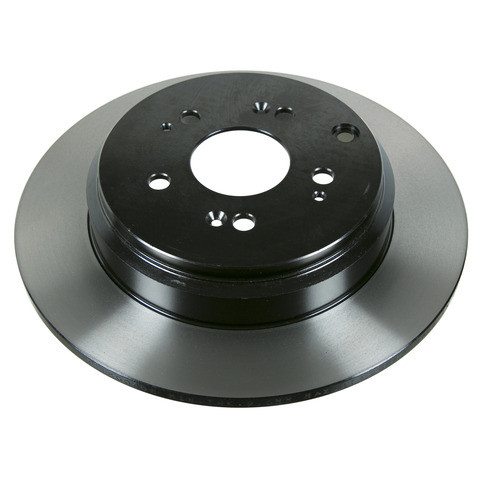
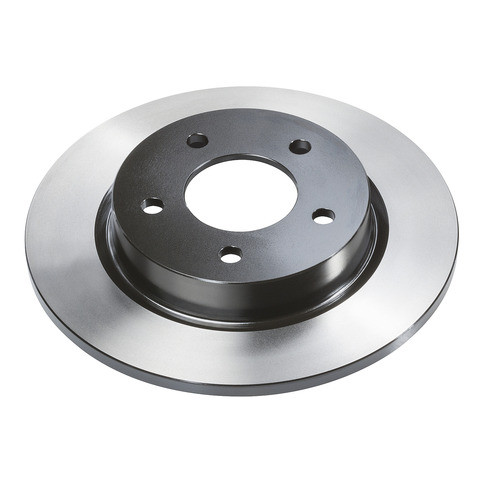
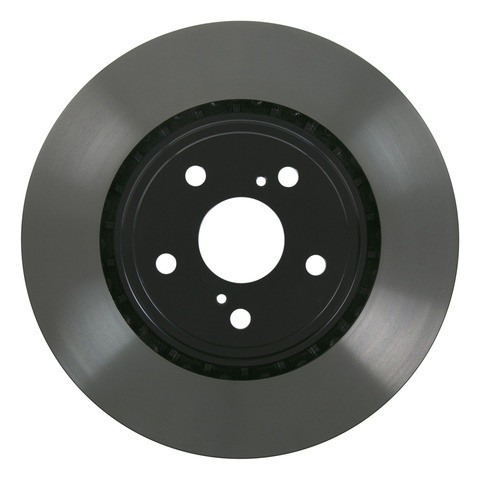
Give your rear brakes a fresh, true friction surface with the Wagner BD180045E rear brake rotor, engineered to match OE requirements for consistent performance, corrosion resistance and ease of installation. It fits many vehicles, among them the 2011-2017 Honda Odyssey, 2009-2015 Honda Pilot and 2007-2013 Acura MDX, as a direct-fit replacement for the listed applications. See the Buyer's Guide tab for the full list.
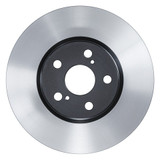
This solid, full-cast disc brake rotor has a smooth surface, a 13.120 in (333.5 mm) outside diameter, a 0.433 in (11.0 mm) nominal thickness and a 2.350 in overall height. It carries a rust-resistant coating.
- OE-style design: Built to match OE requirements as a replacement for a worn or damaged rear rotor.
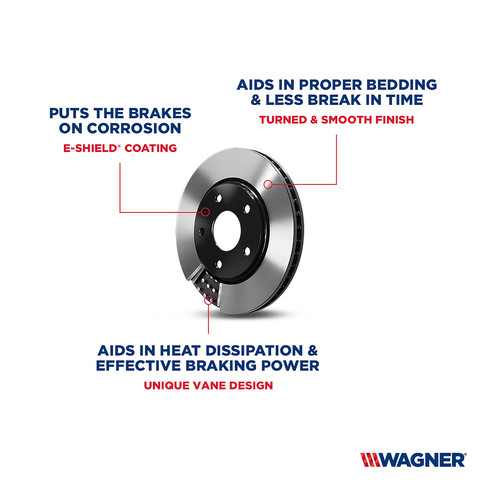
- Resists corrosion: Painted edges and hats provide corrosion resistance.
- Precision finish: The precision-ground surface is designed to cut pad break-in time, aid proper bedding, and help with noise reduction and heat dissipation.
- Proper balance: Precision machined to limit vibration for improved stability, control and reduced pad wear. The application-specific thickness helps control noise, vibration and harshness (NVH), and high-grade metallurgy provides structural integrity and heat dispersion.
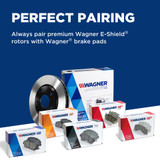
Sold individually, this listing is for one rotor. The listed applications use two, so replacing both rear rotors together as a matched pair is recommended for even, balanced braking. Wagner recommends pairing its rotors with Wagner OEX or QS brake pads.
Country of origin: China.