
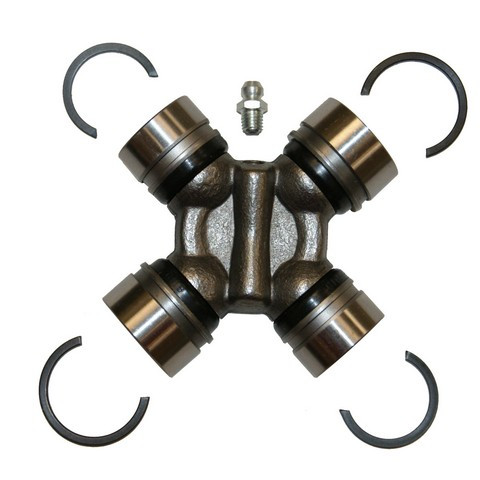


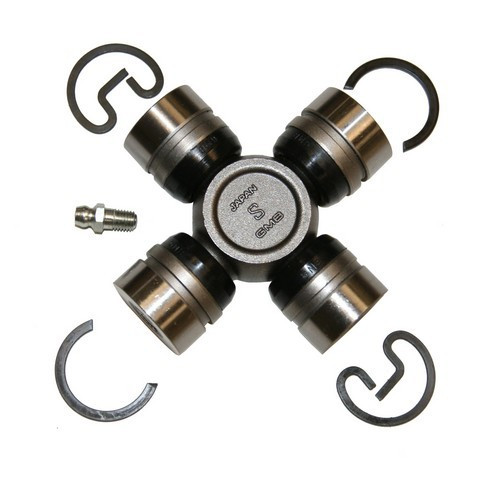

GMB Universal Joint P/N:210-1201
$14.99
GMB 210-1201 rear rear universal joint for the 1968-1973 Ford Mustang and other vehicles carries rotation through the driveshaft while letting the shaft flex as the suspension moves.
- Built to OE-level tolerances
- Chrome-molybdenum alloy steel for corrosion resistance
- Exact-fit snap ring included
- Multi-stage testing before assembly
- Heavy-duty needle bearings for greater load capacity
A clunk when you shift between drive and reverse, or a vibration that grows with speed, can mean a worn universal joint. Before you replace the joint, rule out a bent driveshaft or a worn mount, because both can produce a similar vibration.
The 1986-1989 Ford Ranger and 1986-1989 Ford Aerostar also fit it, as do many other Ford and Mercury models. If your car or engine isn't named here, look it up on the Buyer's Guide tab before you order.
Specifications
- Position: rear shaft rear joint
- Material: chrome-molybdenum alloy steel
- Bearings: heavy-duty needle bearings
- Snap ring: exact fit, included
In the box: one universal joint and an exact-fit snap ring.
Frequently Asked Questions
Will the GMB 210-1201 work as a Ford Ranger universal joint on a 1986-1989 Ford Ranger?
Yes. The GMB 210-1201 is listed for the 1986-1989 Ford Ranger as a rear shaft rear joint. For your engine, check the Buyer's Guide tab.
Does the GMB 210-1201 come with a snap ring?
Yes. The GMB 210-1201 comes with an exact-fit snap ring along with the universal joint.
What is this GMB u joint made of?
It is made of chrome-molybdenum alloy steel for corrosion resistance. This u joint also has heavy-duty needle bearings for greater load capacity.
What does a worn GMB joint feel like in the rear driveshaft?
A clunk when changing between accelerating and letting off, or a vibration that builds with speed, can mean a worn rear universal joint. A shop can test the joint for play.
How is this rear universal joint tested?
This rear universal joint goes through multi-stage testing before assembly. It is also built to OE-level tolerances.
Write a Review
GMB
GMB Universal Joint P/N:210-1201
Related Products

GMB Universal Joint P/N:210-0134
GMB 210-0134 universal joint for the 1975-1978 Ford F-150 and other vehicles connects the sections of the driveshaft and lets them turn together while the angle between them changes as the suspension...
$17.99

GMB Universal Joint P/N:210-0488
GMB 210-0488 rear universal joint for the 2004-2008 Ford F-150 and other vehicles connects the sections of the rear driveshaft and lets them turn together as the angle between them changes.Built to...
$41.99


GMB Universal Joint P/N:210-1200
GMB 210-1200 universal joint for the 2002-2009 Chevrolet Trailblazer and other vehicles connects the sections of a driveshaft and lets them turn at an angle as the axle and suspension move.Built to...
$14.99
GMB Universal Joint P/N:210-1204
GMB 210-1204 universal joint for the 1979-1999 Ford F-250 and other vehicles links the sections of a driveshaft and lets them turn through changing angles as the suspension moves.Meets or exceeds OEM...
$15.99